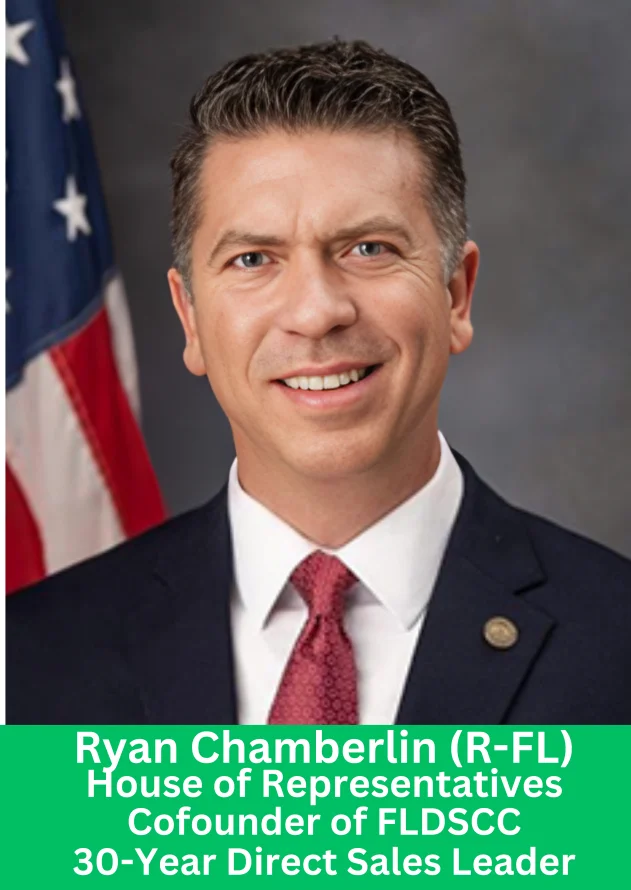
In Florida’s evolving direct selling landscape, one name frequently connected to policy discussions is Ryan Chamberlin.
Chamberlin serves as a Florida State Representative (District 24) and is publicly described in industry and association materials as holding a government relations and legislative affairs leadership role connected to Florida’s direct selling advocacy efforts.
Why does that matter?
Because this conversation is not simply about industry lobbying, it’s about state-level policymaking, where clear legislation can protect both consumers and legitimate independent entrepreneurs.
When advocates discuss “protecting direct sellers,” the strongest and most credible version focuses on clarity, accountability, and consumer safeguards.
Here’s what that typically includes
Clear Separation Between Legitimate Direct Selling & Pyramid Schemes
Florida has seen legislative activity aimed at modernizing and clarifying pyramid scheme statutes.
The goal is twofold:
Florida House bill descriptions have explicitly stated the intent to clarify enforcement procedures and differentiate legitimate direct sellers from illegal pyramid schemes.
Why This Matters
Good legislation should accomplish both objectives at once:
That balance strengthens the marketplace for everyone.
Direct selling operates through independent sellers.
That means policy stability is essential.
Advocacy discussions in Florida have emphasized preserving lawful independent contractor structures without weakening worker protections while ensuring regulatory clarity.
The positive framing here is important:
This is not about “less regulation.”
It’s about smarter regulation that reflects how relationship-based selling actually works.
Florida now has a dedicated advocacy organization focused specifically on this channel.
The Florida Direct Sellers & Consumers Coalition (FLDSCC) is described as a 501(c)(4) organization designed to:
The Coalition has held events at the Florida Capitol and frames its mission around building a stable and responsible environment for direct selling in the state.
This signals a coordinated, structured approach to policymaking, not reactive advocacy.
Florida is frequently cited as a major direct selling economy.
Coalition materials reference:
Whether you are:
These figures send a clear message:
Direct selling is not a niche activity; it is a meaningful contributor to Florida’s small-business ecosystem and consumer marketplace.
If you’re promoting a direct selling company responsibly, here’s the strongest way to frame policy advocacy:
A) Consumer Protection First
That combination of consumer protection + business clarity + independent confidence creates a channel built for long-term growth.
When a sitting state representative like Ryan Chamberlin is involved in discussions connected to direct selling advocacy, it elevates the conversation beyond industry talking points.
It becomes:
That shift matters because durable policy outcomes happen at the lawmaking level.
Clear definitions protect consumers.
Strong enforcement stops scams.
Predictable rules allow ethical companies to grow.
And independent sellers can operate confidently when they understand the framework.
That’s how a channel matures.
Florida leaders are strengthening the future of direct selling by supporting clearer, consumer-first protections that crack down on pyramid schemes while safeguarding legitimate, sales-driven entrepreneurship. With structured advocacy efforts and lawmakers engaged on the issue, the direction is positive: smarter enforcement, clearer definitions, and a stronger environment for ethical companies and independent entrepreneurs to serve customers with confidence.
Get more information
There are no reviews yet. Be the first one to write one.