
Florida’s direct selling regulation has become increasingly important as the state’s direct selling activity continues to grow. Florida is one of the largest markets for independent sellers in the United States, which means regulatory decisions can affect a significant number of consumers, distributors, and businesses.
Regulation in this space is not only about stopping fraud. It also shapes how legitimate businesses operate, how sellers are classified, and how consumer trust is maintained. Understanding the balance between opportunity and protection is essential for anyone evaluating the direct selling model in Florida.
This article breaks down the regulatory environment in a factual, non-promotional way, focusing on what can be verified and how to apply proper due diligence.
What Is Direct Selling
Direct selling involves the sale of products or services directly to consumers, often outside traditional retail settings. Sellers usually operate as independent contractors rather than employees, earning income through commissions, bonuses, or other incentive structures.
In Florida, direct selling is legal when it complies with general business, advertising, and consumer protection laws.
Why Florida Is a High-Impact State
Florida’s large population, strong entrepreneurial culture, and favorable business climate make it a major hub for direct selling activity. Because of this scale, regulators and lawmakers pay close attention to how these businesses operate and how consumers are affected.
Consumer Protection Standards
Florida applies broad consumer protection rules to all businesses, including direct selling companies. These standards focus on preventing deceptive, unfair, or misleading practices.
Key areas of enforcement include:
These rules apply to both companies and individual sellers.
Pyramid Scheme Enforcement
Florida law prohibits pyramid schemes. The core test centers on whether compensation is driven primarily by recruitment rather than genuine product sales to end consumers.
Regulators often examine:
Legitimate direct selling companies must demonstrate real consumer demand beyond their sales force.
Why Advocacy Groups Form
As regulatory scrutiny increases, organized advocacy efforts often emerge to engage lawmakers and influence policy discussions. These groups typically focus on:
They are usually structured as nonprofit advocacy organizations rather than consumer watchdogs.
Who Leads These Organizations
Leadership is commonly drawn from:
This composition matters. While consumer language is often used, the primary function is to represent industry interests in policy discussions.
Why Policymaker Access Matters
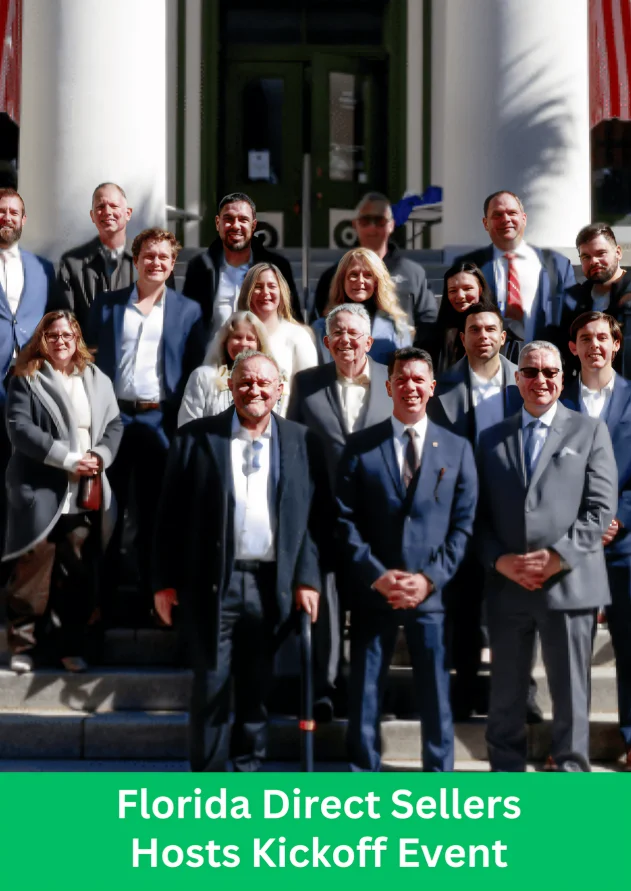
Meetings with executive and legislative officials allow advocacy groups to present their perspective before new laws or enforcement standards are finalized. These discussions often occur well before public legislation appears.
Early engagement helps shape:
This proactive approach is common in many regulated industries.
What This Signals for Regulation
High-level engagement suggests that Florida’s direct selling regulation is not static. It is an active policy area where future changes are possible, especially around classification rules, advertising standards, and enforcement clarity.
Commonly Cited Figures
Advocacy materials often highlight:
These figures are used to argue that the industry plays an important role in the state economy.
Applying Due Diligence
When evaluating such claims, consider:
Without a transparent methodology, these numbers should be viewed as directional rather than definitive.
Why Classification Is Central to the Debate
Most direct sellers are classified as independent contractors. This affects:
Supporters argue that flexibility and entrepreneurship depend on this classification. Regulators focus on preventing misuse or misclassification that could harm participants.
Florida’s direct selling regulation sits at the center of this ongoing debate.
Where Interests Overlap
Both regulators and businesses generally agree that:
This shared ground allows for constructive dialogue.
Where Tensions Arise
Disagreements often occur around:
These tensions shape how regulation evolves.
When assessing advocacy around Florida direct selling regulation, ask:
Transparency and accountability matter more than messaging.
Florida’s direct selling regulation reflects a broader effort to balance economic opportunity with consumer protection. As advocacy efforts expand and policymakers engage more actively, scrutiny will increase, not decrease.
Get more information
There are no reviews yet. Be the first one to write one.