FTC Takes Historic Action Against Amway Over Business Practices
AmwayCorp., one of the largest multilevel marketing companies in the United States, is facing a major regulatory development after the Federal Trade Commission (FTC) and the State of Washington announced a proposed resolution involving the company and two of its affiliates.
The proposed order involves Amway Corp., World Wide Group LLC (WWG), and Leadership Team Development Inc. (LTD).
The companies would pay $225 million under the proposed order to resolve allegations involving unfair and deceptive practices connected to Amway’s direct-selling and multilevel marketing opportunity.
FTC Takes Historic Action Against Multilevel Marketing Operator Amway for Unfair and Deceptive Business Practices
The FTC says the proposed $225 million monetary recovery would be the largest monetary recovery obtained in an FTC action against a multilevel marketing company.
Nearly all of the proposed monetary relief would be used as redress for IBOs who were allegedly harmed by the practices described in the complaint.
The FTC and Washington allege that Amway and its two affiliates used unfair and deceptive tactics to recruit people into the business opportunity.
The complaint focuses on representations about potential earnings, recruitment and product purchases.
The agencies allege that some prospective Independent Business Owners, or IBOs, were given misleading expectations about the amount of money they could earn.
The complaint also alleges that some IBOs were pressured to purchase Amway products even when they did not want the products or were unlikely to resell them.
The FTC further alleges that certain IBOs were instructed to report product sales that had not actually occurred.
According to the complaint, this could create the appearance that the business opportunity was primarily based on product sales rather than recruitment.
These are allegations contained in the FTC and Washington complaint. They should not be presented as criminal convictions.
Proposed $225 Million Order Would Change Amway Business Practices
The proposed order includes more than a financial payment.
It would also introduce several requirements affecting Amway, WWG, LTD and their IBO networks.
One major provision would require IBOs to sell to customers at least 70% of the products they purchase from Amway each month.
The proposed order would also reduce compensation to recruiters when the IBOs they recruit purchase products but do not resell them.
IBOs would be required to report customer sales promptly. The reports would include the actual sales price.
The proposed order would require Amway to terminate IBOs who fake sales or teach others to falsify sales.
Amway’s sales records would also be subject to regular independent auditing.
In addition, IBOs would receive training on the new rules before being allowed to recruit other participants. Approved providers such as WWG and LTD would also be prohibited from charging new IBOs for training or services during their first year under the proposed order.
Amway Owners and Current Leadership
Amwayhas a history stretching back more than six decades.
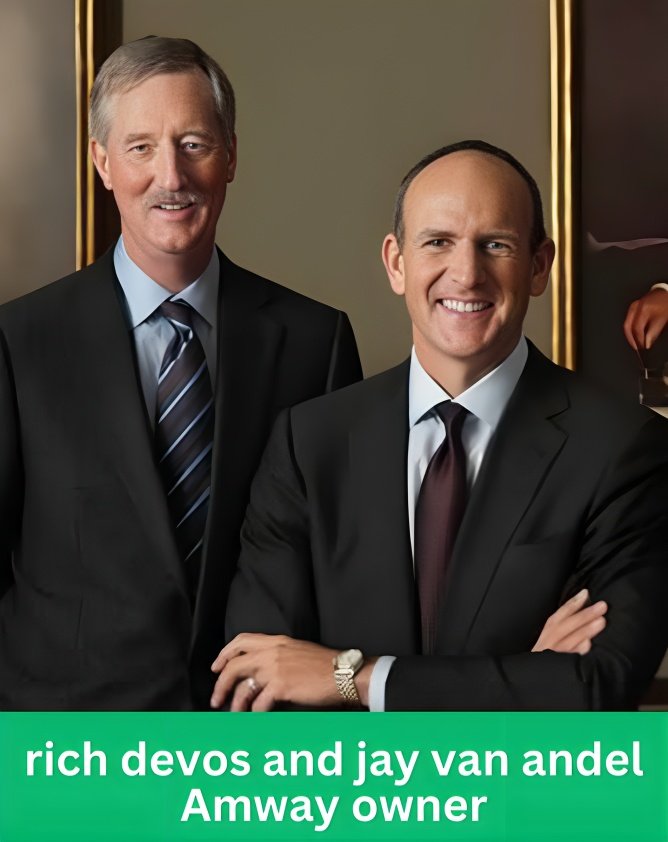
The company was founded in 1959 by Jay Van Andel and Rich DeVos in Ada, Michigan.
Amway remains a privately owned company associated with the Van Andel and DeVos families.
The founding families have continued to play an important role in Amway’s ownership and governance.
Steve Van Andel and Doug DeVos are associated with the two founding families and serve as Co-Chairs of the Amway Board of Directors.
Michael Nelson serves as Amway’s President and CEO.
This distinction is important when discussing the company’s ownership.
Michael Nelson is the company’s CEO.
He should not be described as Amway’s owner.
The company remains connected to the two founding families, while its professional leadership manages day-to-day global operations.
Amway Products and Global Business
Amway operates across several major consumer categories.
Its product portfolio includes nutrition, beauty, fitness, personal care and home care.
One of its best-known brands is Nutrilite, which focuses on vitamins, dietary supplements and other nutrition products.
Artistry is Amway’s beauty and skincare brand.
XS focuses on energy and sports nutrition.
The company’s wider portfolio also includes Amway Home, Glister, g&h, Satinique, eSpring, Atmosphere Sky and iCook.
These brands give Amway a broad presence across everyday consumer categories.
The company sells its products through a network of Independent Business Owners, or IBOs.
Amway describes its IBO opportunity as a way for individuals to operate an independent business selling consumer products.
The company’s global operations extend across more than 100 countries and territories, giving it a substantial international footprint.
Amway's Long History and the Current Regulatory Development
Amway’s business began with household products.
The company later expanded into beauty, nutrition, personal care and other consumer categories.
A major milestone came in 1972, when Amway acquired Nutrilite, helping establish nutrition as a central part of its product portfolio.
Today, Amway remains one of the most recognizable names in direct selling.
Its family ownership, established product brands and international network continue to define the company.
However, the September 2026 FTC action represents an important new development in Amway’s corporate history.
The FTC and Washington filed the complaint and proposed final order in the U.S. District Court for the Western District of Washington. The FTC states that a complaint is filed when the Commission has reason to believe the named defendants are violating or are about to violate the law and that a proceeding is in the public interest.
The proposed order has not changed the fact that Amway continues to operate its global consumer-products business.
It does, however, place significant attention on the company’s recruitment, earnings representations, product purchasing and sales-reporting practices.
For readers following Amway, the development adds a major regulatory chapter to the company’s long-running history in the multilevel marketing industry.