
Greenway Global has emerged as a leading force in the world of eco-focused direct selling, combining sustainability with entrepreneurship. Founded around 2017, this company offers a wide range of over 1,000 eco-friendly products spanning beauty, wellness, and home care.
Operating across 63 countries with over 2 million partners and 350 eco-markets, Greenway Global has positioned itself not just as a business, but as a movement toward sustainable consumerism.
Its mission is clear to make green living accessible, profitable, and inspirational for individuals around the world.
At its heart, Greenway Global represents a convergence of two worlds: eco-conscious consumer goods and network marketing entrepreneurship.
From microfiber cleaning systems and natural cosmetics to eco-detergents and personal wellness items, Greenway’s catalog promotes a lifestyle that minimizes waste and reduces chemical usage. While its sustainability message resonates with modern consumers, independent verification of product certifications remains an area for further transparency. Still, the company’s eco-driven image aligns well with the global green movement appealing especially to environmentally conscious millennials and Gen Z consumers.Greenway Global operates on a multi-level marketing (MLM) framework, where individuals become “partners” and earn through both direct product sales and team building.
Members advance through ranks like L PRO, which unlocks access to leadership events, exclusive bonuses, and brand ambassadorship opportunities. This structure rewards both performance and recruitment a standard feature in the network marketing industry.
Greenway Global’s journey began in the mid-2010s with a simple yet ambitious vision: to merge business success with ecological responsibility.
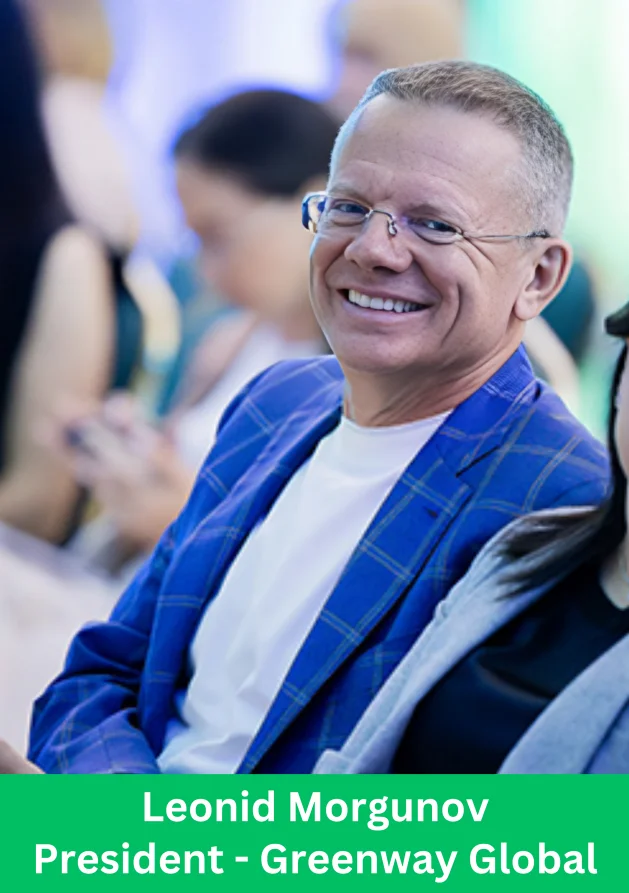
Under the leadership of Leonid Morgunov (President) and his executive team, the company cultivated a culture centered on education, motivation, and sustainable living.
As of 2025, Greenway boasts operations in over 63 countries and maintains 350+ physical eco-markets worldwide. This impressive reach is powered by a decentralized network of distributors and local partners blending online e-commerce with traditional face-to-face selling.
Such hybrid models are becoming increasingly popular in post-pandemic economies.
Greenway Global invests heavily in leadership growth and motivational culture.
Events like Leaders’ Camp in Croatia attract top performers and company mentors.
Speakers such as Inna Zabrodina, Dany Laroque, and guest expert Brian Mayne (founder of Goal Mapping) inspire personal growth and team development.
These leadership summits emphasize mindset transformation, empowerment, and community essential pillars for sustaining momentum in network marketing.
While Greenway Global highlights financial independence opportunities, the average income distribution as with most MLMs remains heavily top-weighted.
Top-ranking leaders (like L PRO) often earn significant rewards, while many partners struggle to generate consistent profits. A recurring question in academic and public discourse is: Is Greenway Global’s sustainability mission genuine, or primarily a marketing strategy?
Although its green branding appeals to ethical consumers, the lack of publicly available impact metrics (e.g., carbon offsets or recycling rates) leaves room for skepticism.
Despite its rapid growth, academic coverage on Greenway Global is minimal. Most studies mentioning “Greenway” refer to unrelated entities like cookstove initiatives or urban greenway infrastructure projects.
However, broader research offers context:
These studies underscore how eco-distribution and direct selling can coexist — but require transparency and ethical governance to succeed long-term.
Greenway Global’s operations in diverse markets mean compliance with a variety of MLM and consumer protection laws from the EU’s Unfair Commercial Practices Directive to stricter regulations in the U.S. and Asia.
Critics urge caution regarding income claims and recruitment-heavy promotions, which may mislead newcomers.
Clear income disclosure and partner success rates are crucial for trust and legitimacy.
As with most network marketing firms, retention and earnings disparity remain key challenges. Only a small fraction of participants likely achieve full-time income.
While the company emphasizes “green” living, independent eco-certifications (like EcoCert or ISO 14024) for its full product range are not widely verified a gap that demands future attention.
When compared to giants like Amway, Herbalife, and Forever Living, Greenway stands out for its eco-driven branding and modern European identity.
However, its limited research transparency places it behind in academic credibility.
The intersection of green consumerism and network entrepreneurship is shaping the future of direct selling.
If Greenway Global can enhance transparency, data-backed sustainability, and partner welfare, it could redefine MLM for the next generation.
Greenway Global exemplifies the modern face of green entrepreneurship blending profit with purpose. While its global expansion and eco-driven mission are commendable, the company still needs greater academic visibility, transparency in earnings, and verified sustainability claims to solidify long-term credibility.
For potential partners or researchers, Greenway Global represents both an exciting opportunity and a case study in evolving green direct sales one that continues to shape conversations around ethical, sustainable business models.
Get more information
There are no reviews yet. Be the first one to write one.